

Medically reviewed by Dr. Sachin Shah - 28-Oct-2026
Rotator Cuff Tear & Injury Treatment in New Jersey
Serving Somerset, Parsippany, Clifton, Toms River, Nutley, West New York, Hazlet, NJ.
Rotator cuff tears and other injuries can cause shoulder pain, weakness, and limited movement, making everyday activities such as reaching overhead, lifting, dressing, and sleeping uncomfortable. At Omega Joint & Spine Centers, we evaluate shoulder symptoms and help patients explore treatment options based on their condition and functional needs.
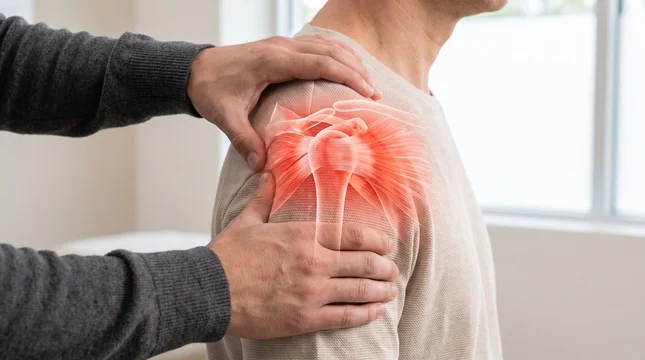
What Causes Rotator Cuff Tears and Injuries?
The rotator cuff consists of four muscles and their tendons that stabilize the shoulder and support arm movement. Repetitive overhead activities, age-related tendon changes, falls, and sudden lifting injuries can cause irritation, strains, or partial or complete rotator cuff tears. These injuries may develop gradually or occur suddenly following trauma.
Common Symptoms
Rotator cuff tears and injuries may cause:
- Pain when raising or rotating the arm
- Weakness when lifting or carrying objects
- Shoulder stiffness or reduced range of motion
- Pain that worsens at night or disrupts sleep
- Difficulty performing everyday tasks that involve reaching or lifting
Persistent symptoms or sudden weakness following an injury should be evaluated by a medical professional.
Rotator Cuff Tear and Injury Evaluation and Treatment
Evaluation may include a physical examination and imaging, such as ultrasound or MRI, when appropriate. Treatment depends on the type and severity of the injury and may include activity modification, chiropractic care and coordinated rehabilitation, with referral to physical therapy when needed, medication management, and targeted injections.
Ultrasound-guided injections can deliver medication to a specific area when clinically indicated. Platelet-rich plasma (PRP) injections may be considered for selected patients, although evidence of effectiveness varies by injury type and PRP is not appropriate for every rotator cuff tear.
Patients with significant tears, persistent weakness, or symptoms that do not improve may require evaluation by an orthopedic specialist to discuss additional treatment options, including surgery.
Get Help for Rotator Cuff Tears and Injuries
At Omega Joint & Spine Centers, treatment recommendations are tailored to your symptoms and functional goals. Same-week appointments are available.
Call (732)908-8042 to discuss your shoulder pain and schedule an evaluation.
Seek prompt medical attention for severe pain after an injury, visible shoulder deformity, or inability to raise your arm. Shoulder pain accompanied by chest pressure or shortness of breath requires emergency care.
Insurance & Coverage
Omega Joint & Spine Centers accepts Medicare and most major medical plans with out-of-network benefits, including PPO and POS plans. Before your first visit, our team checks your benefits and gives you a cost estimate, so you know what to expect. We do not accept Medicaid or NJ FamilyCare.
Check My CoverageMedicare and most major medical plans accepted. Free benefits check before your visit.
Frequently Asked Questions
-
What are the common symptoms of a rotator cuff injury?
Common symptoms include shoulder pain, weakness when lifting or rotating the arm, limited range of motion, and discomfort that worsens at night or when lying on the affected shoulder.
-
Can a rotator cuff injury heal without surgery?
Some rotator cuff injuries improve with nonsurgical treatment, including activity modification, coordinated rehabilitation, and pain management. More significant tears or persistent weakness may require evaluation by an orthopedic specialist to discuss additional options.
-
Can PRP injections help with rotator cuff injuries?
Platelet-rich plasma (PRP) injections use a concentration of platelets derived from your own blood. They may be considered for selected rotator cuff conditions, but evidence of their effectiveness varies, and they may not be suitable for every injury.
-
What are ultrasound-guided injections for rotator cuff injuries?
Ultrasound-guided injections use imaging to help guide a needle toward a targeted area of the shoulder. Depending on the diagnosis, these injections may deliver medication to help manage pain and inflammation. Your provider can determine whether this approach is appropriate for your condition.