

Medically reviewed by Dr. Sachin Shah - 28-Oct-2026
Radiculopathy Treatment in New Jersey
Serving Somerset, Parsippany, Clifton, Toms River, Nutley, West New York, Hazlet, NJ.
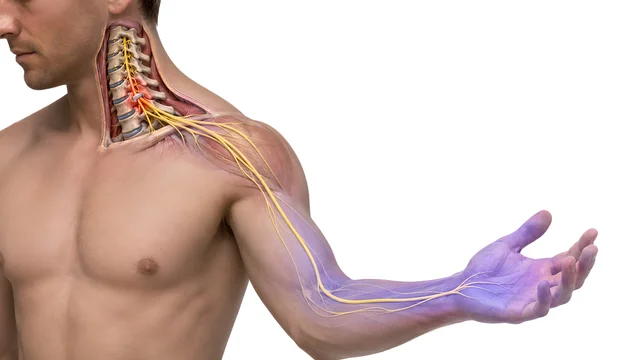
Radiculopathy occurs when a spinal nerve root becomes irritated or compressed, potentially causing pain, numbness, tingling, or weakness that travels into an arm or leg. Unlike pain limited to the neck or back, radiculopathy can produce symptoms along the path of an affected nerve. At Omega Joint & Spine Centers, evaluation focuses on identifying the source of nerve dysfunction and determining which treatments may help improve comfort and function.
What Causes Radiculopathy?
Radiculopathy often develops when changes in the spine place pressure on a nerve root. Common causes include herniated discs, bulging discs, spinal stenosis, and degenerative changes that narrow the spaces where nerves exit the spine. Symptoms can affect the cervical spine in the neck or the lumbar spine in the lower back.
Cervical radiculopathy may cause pain, tingling, or weakness that extends into the shoulder, arm, or hand. Lumbar radiculopathy can cause similar symptoms that travel into the buttock, thigh, lower leg, or foot.
Although radiculopathy is often described as a pinched nerve, the terms are not always interchangeable. Radiculopathy specifically involves irritation or compression of a nerve root as it exits the spine, while a pinched nerve can occur in other locations along a nerve's path. Sciatica refers to pain that travels along the sciatic nerve, typically affecting the buttock and leg, and may result from lumbar radiculopathy. Understanding the differences between radiculopathy, sciatica, and a pinched nerve can help clarify the possible source of symptoms and guide appropriate evaluation and treatment.
How EMG/NCS Testing Helps Evaluate Radiculopathy
EMG/NCS nerve testing may help clarify the diagnosis when symptoms suggest nerve-root involvement. Electromyography (EMG) evaluates electrical activity in selected muscles, while nerve conduction studies (NCS) measure how electrical signals travel through peripheral nerves. Together, these tests can help identify patterns of nerve dysfunction and distinguish radiculopathy from certain peripheral nerve conditions.
EMG/NCS testing is not necessary for every patient. A provider may recommend it when symptoms, examination findings, and imaging do not fully explain the problem, or when it is important to distinguish a spinal nerve-root issue from another source of numbness, tingling, or weakness.
Results are interpreted alongside your medical history, physical examination, and imaging when appropriate. No single test provides every answer, but the combined findings can help guide treatment decisions.
Radiculopathy Treatment Options
Treatment depends on the affected nerve, the severity and duration of symptoms, and the underlying cause. Some patients improve with conservative care, while others may benefit from targeted pain management procedures.
Chiropractic care and coordinated rehabilitation, with referral to physical therapy when needed, may help address mobility limitations and support function when clinically appropriate. Activity modification and other conservative measures may also be recommended as part of an individualized plan.
For selected patients with nerve-root inflammation and radiating pain, epidural steroid injections may be considered to deliver anti-inflammatory medication into the epidural space near affected spinal nerves. These injections may provide temporary symptom relief and help support participation in rehabilitation, although results vary.
If symptoms persist, additional diagnostic evaluation or consultation with a spine specialist may be appropriate. Treatment recommendations are based on the clinical findings, and no single approach is suitable for everyone.
When Should You Seek Care for Radiculopathy?
Consider an evaluation if radiating pain, tingling, numbness, or weakness persists, returns frequently, or interferes with walking, working, sleeping, or other daily activities. Early assessment can help identify the likely source of symptoms and determine whether additional testing or treatment is warranted.
New or rapidly worsening weakness, loss of bladder or bowel control, or numbness around the groin or saddle area requires urgent medical evaluation.
Get Evaluated for Radiculopathy in NJ
Nerve-related symptoms can have several possible causes, so identifying the source is an important part of choosing appropriate care. Omega Joint & Spine Centers offers coordinated evaluation and treatment options that may include EMG/NCS nerve testing, epidural steroid injections, chiropractic care, and rehabilitation referrals when appropriate.
Call (732)908-8042 to discuss your symptoms and schedule an appointment with Omega Joint & Spine Centers. Same-week appointments may be available.
Insurance & Coverage
Omega Joint & Spine Centers accepts Medicare and most major medical plans with out-of-network benefits, including PPO and POS plans. Before your first visit, our team checks your benefits and gives you a cost estimate, so you know what to expect. We do not accept Medicaid or NJ FamilyCare.
Check My CoverageMedicare and most major medical plans accepted. Free benefits check before your visit.
Frequently Asked Questions
-
What is the difference between radiculopathy and a pinched nerve?
Radiculopathy specifically involves irritation or compression of a spinal nerve root, which can cause pain, tingling, numbness, or weakness that travels into an arm or leg. A pinched nerve is a broader term that can describe nerve compression in different parts of the body. An evaluation can help identify the location and cause of the symptoms.
-
How is radiculopathy diagnosed?
Radiculopathy is evaluated through a medical history, physical examination, and, when appropriate, imaging studies. EMG/NCS nerve testing may also be recommended to assess nerve function and help distinguish spinal nerve-root problems from other nerve conditions.
-
What treatments are available for radiculopathy?
Treatment depends on the underlying cause and severity of symptoms. Options may include chiropractic care and coordinated rehabilitation, activity modification, and epidural steroid injections for selected patients. Additional testing or referral to a spine specialist may be appropriate when symptoms persist or worsen.
-
Is radiculopathy the same as sciatica?
No. Radiculopathy refers to dysfunction of a spinal nerve root, while sciatica describes pain that travels along the sciatic nerve, usually through the buttock and leg. Lumbar radiculopathy can cause sciatica, but not all radiculopathy affects the sciatic nerve. Both conditions require an appropriate evaluation to determine the source of symptoms.
Experiencing radiating pain, numbness, or weakness? Call Omega Joint & Spine Centers at (732) 234-9750 to discuss your symptoms and schedule an evaluation.