

Medically reviewed by Dr. Sachin Shah - 28-Oct-2026
Sciatica Treatment in NJ
Serving Somerset, Parsippany, Clifton, Toms River, Nutley, West New York, Hazlet, NJ.
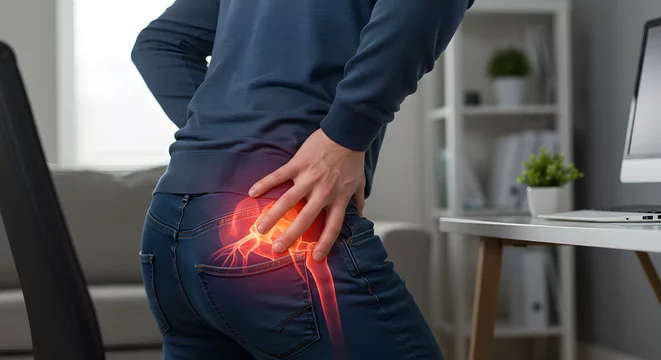
Sciatica can cause sharp, shooting pain that travels from the lower back through the buttock and down one leg. Symptoms may include burning, tingling, numbness, or weakness that makes sitting, walking, and working uncomfortable.
At Omega Joint & Spine Centers, we evaluate possible causes of sciatic nerve pain and recommend appropriate treatment options based on your symptoms and needs.
What Causes Sciatica?
Sciatica occurs when the sciatic nerve pathway becomes irritated, often because of pressure on nerve roots in the lower spine. A herniated disc may compress a nearby nerve root, while spinal stenosis can narrow the spaces around spinal nerves.
Sciatica may also be associated with radiculopathy, which involves irritation or compression of a spinal nerve root. A pinched nerve can cause radiating pain, tingling, numbness, or weakness, depending on its location.
Another possible cause is piriformis-related pain. The piriformis muscle lies deep in the buttock near the sciatic nerve. Irritation or tightness in this muscle may contribute to buttock pain and symptoms extending down the leg. Because these conditions can feel similar, an evaluation can help identify the likely source.
Common Symptoms of Sciatica
Sciatica may cause pain that travels from the lower back or buttock down the back or side of one leg. The discomfort may feel sharp, electric, burning, or aching. Other symptoms include tingling, numbness, and weakness in the leg or foot.
Sitting for long periods, coughing, sneezing, or certain movements may worsen symptoms. Persistent radiating pain or weakness may warrant an evaluation for sciatica, radiculopathy, or another pinched nerve.
How Long Does Sciatica Last?
Sciatica may improve within a few weeks, but some cases last several months or recur. The duration depends on the underlying cause, the severity of nerve irritation, and individual health factors. Symptoms associated with temporary inflammation may settle with appropriate care, while disc problems or spinal stenosis may require further evaluation.
Persistent pain, worsening numbness, or weakness should be assessed by a healthcare professional rather than ignored.
How Is Sciatica Diagnosed? Understanding EMG Testing
Evaluation usually includes a review of your medical history, symptoms, and physical examination. Your provider may assess muscle strength, sensation, reflexes, walking, and movements that reproduce pain. Imaging may be recommended when needed to investigate possible spinal causes.
Electromyography (EMG) and nerve conduction studies (NCS) may help evaluate nerve and muscle function. EMG measures electrical activity in selected muscles, while NCS assesses how electrical signals travel through peripheral nerves. These tests can help investigate suspected radiculopathy and distinguish certain nerve-root problems from peripheral nerve conditions. Not everyone with sciatica needs these tests.
Sciatica Treatment at Omega Joint & Spine Centers
Treatment depends on the cause and severity of symptoms. Options may include activity adjustments, rehabilitation exercises, mobility training, medication management, or other conservative approaches.
For selected patients with persistent pain related to irritated spinal nerve roots, epidural injections may be considered to help reduce inflammation. Other pain management procedures may be appropriate depending on the diagnosis. Your provider can explain the potential benefits and limitations of available treatments.
When to Seek Emergency Medical Care
Warning signs that require urgent attention
Seek emergency medical care if you experience new loss of bladder or bowel control, numbness around the groin or saddle area, or rapidly worsening leg weakness. These symptoms may indicate serious nerve compression requiring immediate assessment.
Personalized Sciatica Care in NJ
Sciatic nerve pain can interfere with daily activities, but identifying its cause can help guide appropriate care. Omega Joint & Spine Centers offers personalized spine care and pain management based on your symptoms and treatment goals.
Same-week appointments are available. Call (732) 234-9750 or request an appointment to discuss your symptoms and explore appropriate sciatica treatment options.
Insurance & Coverage
Omega Joint & Spine Centers accepts Medicare and most major medical plans with out-of-network benefits, including PPO and POS plans. Before your first visit, our team checks your benefits and gives you a cost estimate, so you know what to expect. We do not accept Medicaid or NJ FamilyCare.
Check My CoverageMedicare and most major medical plans accepted. Free benefits check before your visit.
Frequently Asked Questions
-
What are the common symptoms of sciatica?
Sciatica commonly causes pain that travels from the lower back through the buttock and down one leg. Other symptoms may include tingling, numbness, burning sensations, or leg weakness. Symptoms can vary depending on the underlying cause.
-
How long does sciatica usually last?
Sciatica may improve within a few weeks, but some cases can persist for several months or return over time. The duration depends on the cause, severity, and response to treatment. Persistent or worsening symptoms should be evaluated by a healthcare professional.
-
Can a herniated disc or piriformis syndrome cause sciatica?
Yes. A herniated disc can irritate or compress a nerve root in the lower spine, causing pain that radiates down the leg. Piriformis syndrome may cause similar symptoms when the piriformis muscle irritates the sciatic nerve. A clinical evaluation can help distinguish between these conditions.
-
Is EMG testing necessary to diagnose sciatica?
Not everyone with sciatica needs an electromyography (EMG) test. When appropriate, EMG and nerve conduction studies (NCS) can help assess nerve function and identify signs of nerve-root irritation or other nerve problems. A provider may recommend testing based on your symptoms and examination findings.